The future is seen in nano size. All scientific efforts are aimed at making many innovations of nano products, and for that, the world of nanofabrication has arrived. But what does it consist of? Nanofabrication is developing a large number of nanoscale components to improve the work of millions of people. Science frequently demands new alternatives related to nanofabrication, and therefore, its forms of production and creation have been simplified. Want to find out more about nanofabrication?
What is Nanofabrication?
There is much confusion between nanofabrication and nanomanufacturing. It is true that they are very similar, and that in many cases both terms are used interchangeably. However, while nanomanufacturing refers specifically to the economic activity which makes different products, nanofabrication corresponds more to the research and development of new materials and processes, and not so much the industrial-type production.
In summary, nanofabrication involves the process of designing the future manufacture of a nano-sized product. To do so, it takes into account the materials used, as well as the form of their execution. Therefore, it is an area that is under constant study and renovation.
What are the Objectives of Nanofabrication?
Nanofabrication is one of the primary resources used by all areas of knowledge and work which require semiconductors. Therefore, among the main objectives of nanofabrication, is to make nanoscale objects, which can, in turn, perform specific analyses according to their functionality.
However, the conception of independent nanoscale objects is not the only thing that it aspires to. In addition to that, nanoproducts are also created to be incorporated into other objects and thus improve their functionality or provide them with a specific character, thanks to the speciality previously determined. In the same order of ideas, nanofabrication also serves to develop areas such as nanolithography, which works on the creation of nanoscale structures.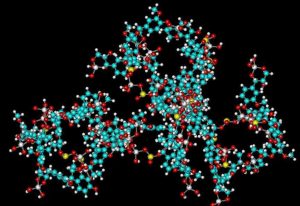
How are Nanoproducts Made?
Mainly, there are two ways to make nanoproducts. In them, what varies is the order for manufacturing, as well as the possible products to be made, as follows.
Top-Down
As the name implies, top-down is that work in nanofabrication which starts from a large element that is moulded until the nano-sized figure is achieved. Due to its own characteristics, it is more expensive, more chemicals are spent, and material must also be invested that will be reduced to waste. Nor is it a product that can be done quickly, so its mass production is improbable.
Bottom-Up
The bottom-up process goes the other way since it starts from the smallest to manufacturing an object on a nanoscale. This is done through a thermodynamic process which executes a structure already planned with the nanofabrication process. Unlike the top-down, the bottom-up process allows maximum utilisation of all components, which implies economic savings. In this case, the process is done through chemical synthesis, whose components are 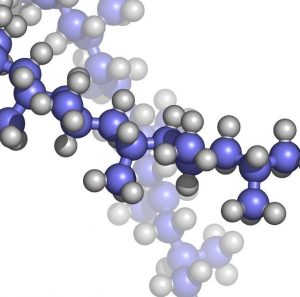 subsequently assembled until the final result is obtained.
In What Areas Are Nanofabrication Products Used?
Nanofabrication is something which will always be related to the use of semiconductor materials, so it can be said that it is its main area of work. Also, it is involved with industries such as microelectronics, data storage and energy, and thus, in areas such as photovoltaic solar energy and solar panels.
As regards your electronic devices, as in eco-electricity, nanofabrication is growing in every aspect of life. With strength and patience, the future will be full of products from nanofabrication.